
The Nijo Castle garden in three parts
Visitors talk about the Nijo Castle garden as if it were one place, but the grounds hold three very different designs. The Ninomaru Garden is a classic pond garden, the Honmaru Garden is a modern lawn garden, and the Seiryu-en blends Japanese and western styles.
If you like to have the history explained as you walk, the guided Nijo Castle tours cover the castle grounds, and one private tour lists the gardens among its stops. For the palace behind the pond, see the Ninomaru Palace guide.
Our pick: a private tour that includes the gardens
A private tour that explains the gardens and the East Main Gate in detail.
Hand-picked tours, booked through GetYourGuide. Prices are indicative starting prices in US dollars (as of October 2026). Tap a tour for live availability and the current price in your currency.
Nijo Castle tours that include the gardens
Guided walks through the castle grounds, palace approaches and gardens, with live prices and availability.
Ninomaru Garden
The pond garden beside the Ohiroma.
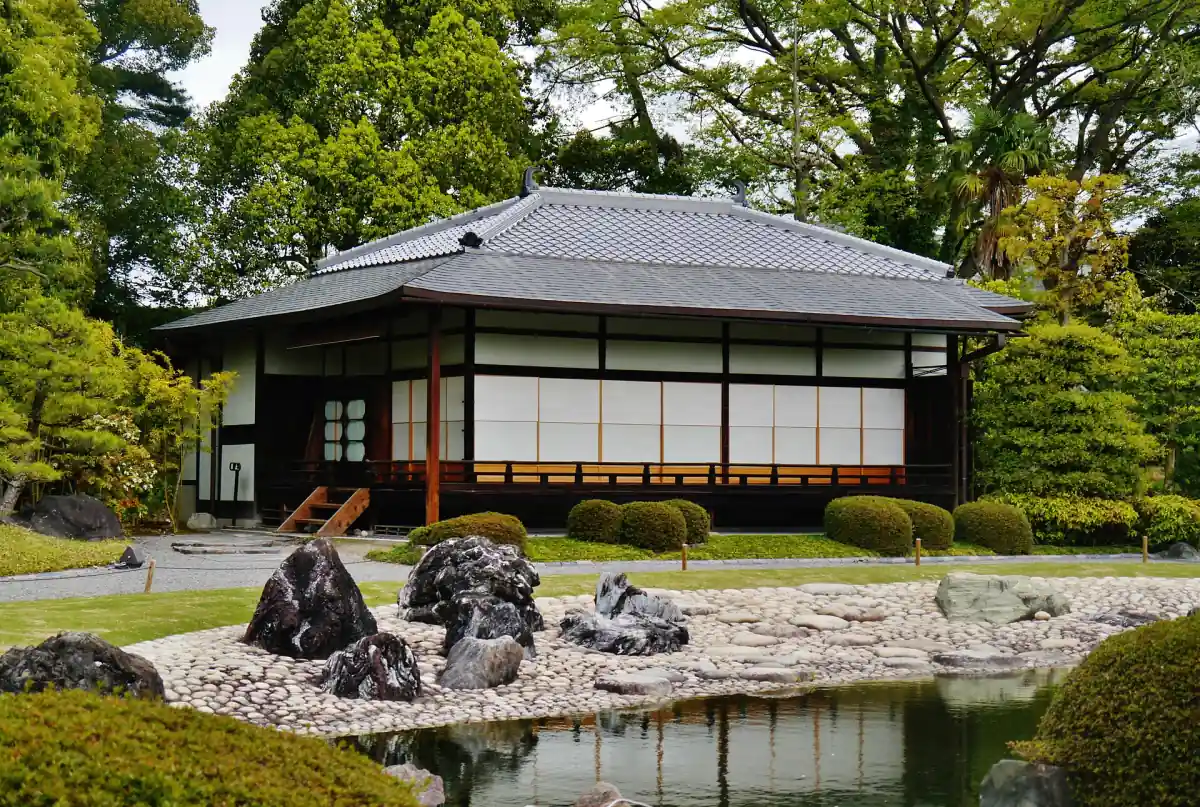
West of the Ohiroma, the great audience hall, lies a pond garden with a waterfall and islands. It was probably redesigned for the imperial visit of 1626, with the garden designer Kobori Enshu involved, and it is protected as a Special Place of Scenic Beauty. It is best viewed from the palace veranda side and along the path, at a slow pace, because the arrangement of rocks and pines changes from every angle.
Honmaru Garden
Lawns and a viewing hill.
The garden of the inner castle was created after the Honmaru Palace was moved here. Emperor Meiji had it redesigned in 1895. Today it has wide lawns, curving paths and an artificial hill from which you look over the grounds. It belongs to the Honmaru side of the castle, so read the Honmaru Palace guide before you plan it.
Seiryu-en
The Seiryu-en was laid out in 1965. Its western half is Japanese in style, with the Koun-tei and Waraku-an tea buildings, while the eastern half is a lawn in the western manner. The stones, trees and historic materials came from the merchant family Suminokura.
Tea at Waraku-an
The Waraku-an serves matcha and sencha sets, usually from 09:30 to 16:30, with the last order at 16:00. It can close at short notice. Treat it as a tea stop, not a booked ceremony. If you want a proper tea ceremony in Kyoto, look at the Kyoto experiences near the castle.
Cherry and plum blossoms
Spring is the most photographed season.
The castle has about 300 cherry trees of roughly 50 varieties. The general season runs from late March to April: yamazakura and Somei Yoshino bloom from late March to early April, weeping cherries from late March to mid April and satozakura from early to late April. About 100 plum trees stand mostly in the southwest and bloom from mid February to the end of March, normally at their peak from late February to mid March.
These are typical periods and not a forecast, so full bloom has no fixed date. In spring the evening openings are called the Sakura Matsuri, which ended for 2026. Read the light-up guide for how the evenings work.
Autumn colours
Maple, ginkgo, cherry and enkianthus colour the grounds. The official autumn season is wide, from late October to early January, and the trees do not all peak together. See the season guide for the weather side of planning.
FAQ
How many gardens does Nijo Castle have?
Three: the Ninomaru Garden, the Honmaru Garden and the Seiryu-en.
When do the cherry trees bloom at Nijo Castle?
The general season runs from late March to April, depending on the variety. The date of full bloom moves from one year to the next.
Where do I find the Honmaru Garden?
It lies in the inner castle next to the Honmaru Palace. The Honmaru Palace has its own timed ticket, described in the Honmaru guide.
Can I have tea in the castle grounds?
The Waraku-an serves matcha and sencha sets. It is a tea stop, not a ceremony you can book at any time.
When are the plum trees in bloom?
Usually from mid February to the end of March, with a peak from late February to mid March.