
Nijo Castle history in short
The history of Nijo Castle begins with Tokugawa Ieyasu, who had the castle built as the Kyoto residence of the shogun. The order to build went out to western daimyo in 1601, and the castle was completed in 1603. Fires later destroyed the tower and the earlier Honmaru Palace. In 1867 it became the place where shogun rule was handed back to the emperor, and afterwards it was an imperial villa and then city property.
Each period has left something you can still see today, from the Ninomaru Palace with its Kano school paintings to the Honmaru Palace, whose buildings came from an imperial palace.
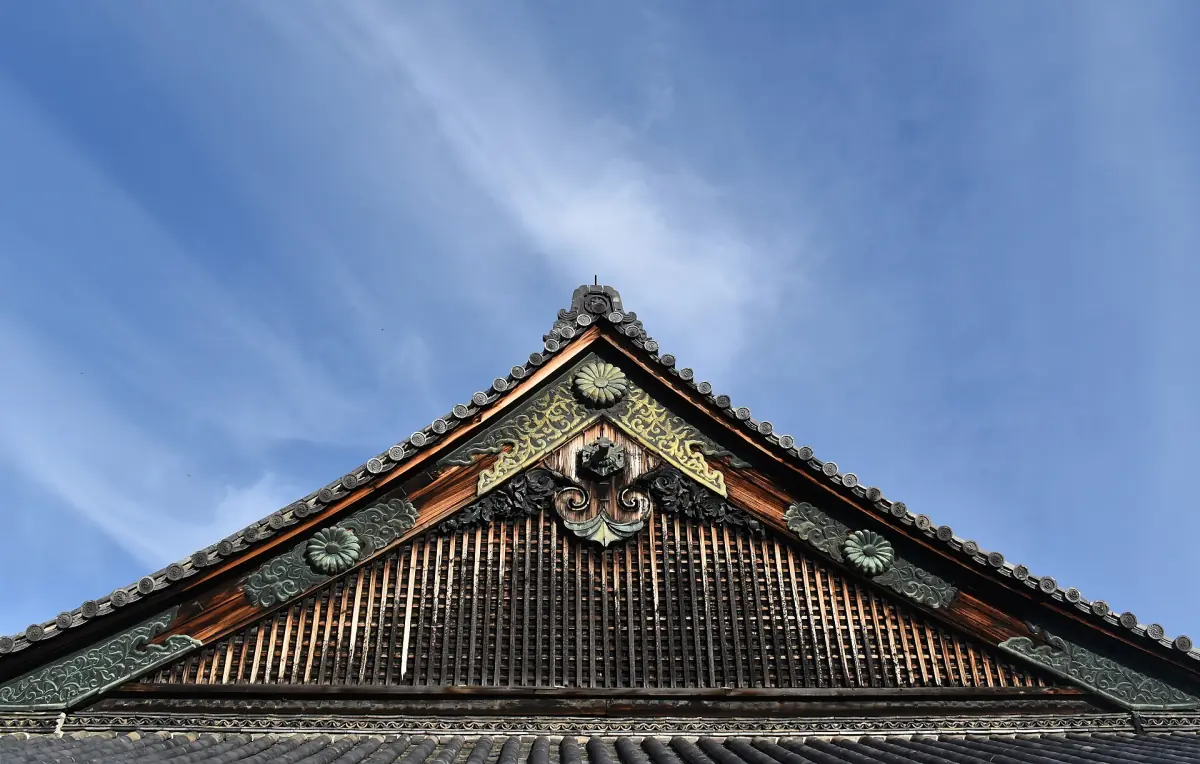
Built for Tokugawa Ieyasu
1601 and 1603, a shogun's base in the imperial capital.
Ieyasu ordered the castle built in 1601. It was finished and first occupied in 1603, and from then on it served as the Kyoto residence of the Tokugawa shoguns. The sequence of waiting rooms and audience halls, which reflects the ranks of those who visited, is described on the Ninomaru Palace page.
Our pick: a three-hour walk through the history
An English-speaking guide takes you through the castle and the Imperial Palace in turn, so the history comes in order.
Hand-picked tours, booked through Viator. Prices are indicative starting prices in US dollars (as of October 2026). Tap a tour for live availability and the current price in your currency.
Guided walks through Nijo Castle's history
A guide explains the shoguns, the court and the changes the castle went through. Some walks combine the castle with the Imperial Palace, and the entrance fee depends on the tour.
The imperial visit of 1626
Five days that shaped the castle.
The castle was extended between 1624 and 1626 for a five day visit by the emperor in September 1626, under the second shogun Hidetada and the third shogun Iemitsu. The Kano school painters made new wall and sliding screen paintings, and further buildings were added. The link to the court was already strong: in 1620 Tokugawa Masako, Hidetada's daughter, had become the consort of Emperor Go-Mizuno-o.
2026 marks 400 years since that visit. A procession reenactment is planned for 6 December 2026, and on that day the castle admits visitors only until 12:00. The page on the Imperial Palace tells more about the court side of the story.
Fires of 1750 and 1788
What was lost, and why the Honmaru Palace looks as it does.
In 1750 the castle tower burned down after a lightning strike. In 1788 a major fire destroyed the Honmaru Palace of that time. This is why the Honmaru Palace you can visit today does not date unchanged from the foundation of the castle; its present buildings came later, as described below. The Honmaru Palace page explains how a visit works.
1867: Taisei Hokan in the Ohiroma
The end of shogun rule.
In 1867 the 15th shogun, Tokugawa Yoshinobu, declared in the Ohiroma of the Ninomaru Palace that he would return political power to the emperor. This act is called Taisei Hokan. The Ohiroma was the hall for formal audiences, so the room that once displayed shogun authority became the place where it was given up.
Imperial villa and city property
1884, 1893 and 1894, 1915 and 1939.
In 1884 the castle was turned into the imperial villa Nijo Rikyu. Between 1893 and 1894 buildings of the Katsura no Miya Palace were moved to the Honmaru, and they form the present Honmaru Palace, which is an Important Cultural Property. In 1915 a celebration banquet took place for the accession of Emperor Taisho, and the south gate was built. In 1939 the castle was handed over to the City of Kyoto, which owns and runs it today.
Nijo Castle facts
Size, buildings and World Heritage status.
The castle covers 275,000 m², with an outer perimeter of about 2 km. It measures roughly 600 m from east to west and 400 m from north to south. The Ninomaru Palace has six connected buildings in the shoin-zukuri style, and the palace is designated a National Treasure.
Since 1994 Nijo Castle has been part of the World Heritage listing Historic Monuments of Ancient Kyoto (Kyoto, Uji and Otsu Cities), under criteria (ii) and (iv). The listing has 17 components, and Nijo is the castle among them. To plan a visit, the ticket page lists the entrance fees.
Nijo Castle history: frequently asked questions
Who built Nijo Castle?
Tokugawa Ieyasu ordered it built in 1601, and it was completed in 1603 as the Kyoto residence of the shogun. Later shoguns extended it before the imperial visit of 1626.
What happened at Nijo Castle in 1867?
The 15th shogun, Tokugawa Yoshinobu, announced in the Ohiroma of the Ninomaru Palace that he would return political power to the emperor. It is known as Taisei Hokan.
Why is Nijo Castle a World Heritage site?
It is one of the 17 components of Historic Monuments of Ancient Kyoto, listed by UNESCO in 1994 under criteria (ii) and (iv).
Is the Honmaru Palace as old as the castle?
No. A fire destroyed the earlier Honmaru Palace in 1788, and the present palace includes buildings moved from the Katsura no Miya Palace in 1893 and 1894.